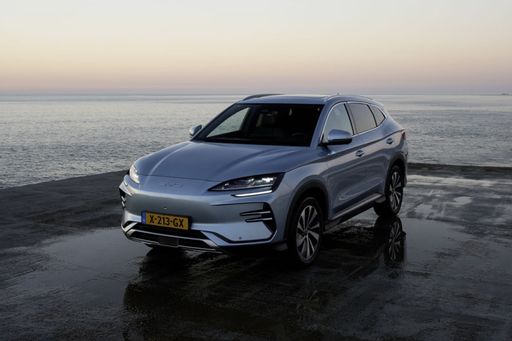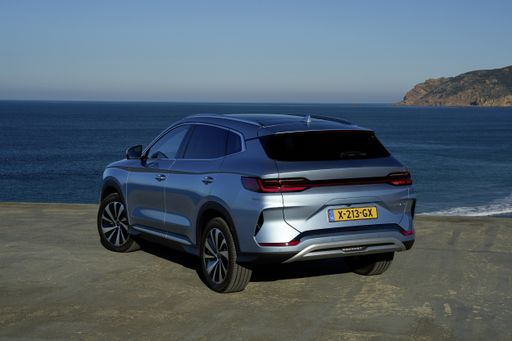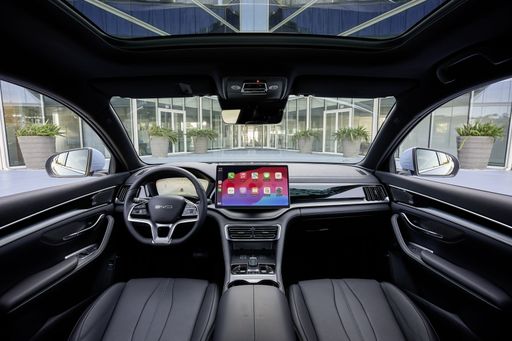
@ BYD Auto / BYD Global Media
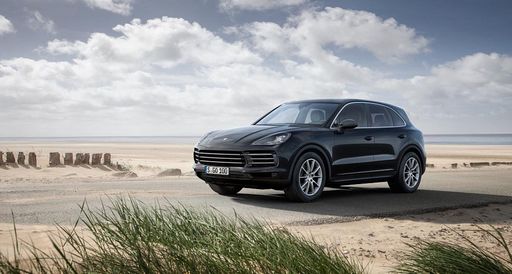
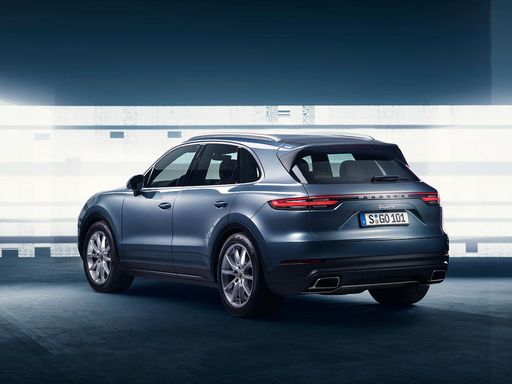
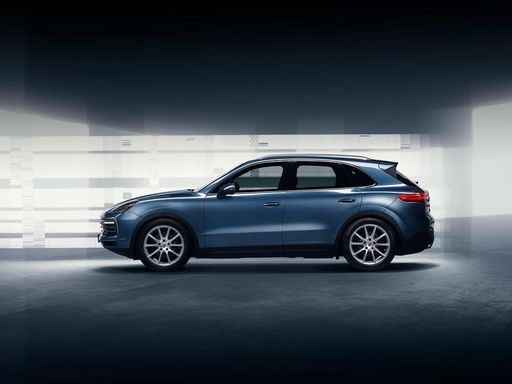
@ Dr. Ing. h.c. F. Porsche AG
VS

BYD Seal U vs Porsche Cayenne – ¿Qué coche se adapta mejor a ti?

Ambos modelos tienen sus puntos fuertes – pero, ¿cuál es el adecuado para ti?
Compara directamente rendimiento, consumo, precio y espacio: BYD Seal U o Porsche Cayenne?

Seal U @ BYD Auto / BYD Global Media

BYD Seal U vs. Porsche Cayenne: A Clash of Modern Luxury SUVs

In the world of luxury SUVs, the names BYD Seal U and Porsche Cayenne are creating a buzz. Both vehicles exemplify cutting-edge technology, robust performance, and sleek design. However, they cater to slightly different markets and offer unique features that automobile enthusiasts crave. Let's delve into an in-depth comparison of these modern marvels to help potential buyers make an informed decision.

Cayenne @ Dr. Ing. h.c. F. Porsche AG

Engine and Performance

The BYD Seal U offers flexibility with both Plugin Hybrid and Electric options. Under the hood, the vehicle boasts a power range of 218 to 324 HP, achieving a swift acceleration from 0 to 100 km/h in 5.9 to 9.6 seconds, depending on the configuration. The car's maximum speed ranges from 170 to 180 km/h, making it a solid choice for those seeking efficient yet compelling performance.

On the other hand, the Porsche Cayenne is a powerhouse with Plugin Hybrid and Petrol engine types, offering a broader power spectrum from 353 to a staggering 739 HP. Acceleration is breathtaking with times as low as 3.6 seconds to 100 km/h, and a top speed reaching up to 305 km/h. This performance, paired with an all-wheel-drive system, provides more stability and precision.

Seal U @ BYD Auto / BYD Global Media

Environmental Impact and Efficiency

Regarding environmental considerations, the Seal U shines with a CO2 efficiency class ranging from A to B. Its fuel consumption is remarkably low, from as little as 0.9 L/100km to 1.2 L/100km for hybrids, and 19.9-20.5 kWh/100km in electric mode, with an electric range extending up to 500 km. This vehicle would be appealing to eco-conscious drivers looking for a greener option.

Conversely, the Cayenne offers a balance between power and efficiency. Its CO2 efficiency class varies vastly from B to G, with consumption rates ranging between 1.4-1.8 L/100km for its hybrid variants, though going up to 12.6 L/100km for regular petrol versions. The battery capacity supports a fair electric range of up to 78 km, befitting urban commuters who want bursts of speed and eco-friendliness.

Cayenne @ Dr. Ing. h.c. F. Porsche AG

Innovative Designs and Features

BYD engineered the Seal U with practicality in mind. Measuring 4785mm in length, it provides sufficient cabin and trunk space of up to 552 liters, offering comfort and convenience to the user. The curb weight varies from 1940 to 2147 kg, and a payload capacity of 410 kg, reflecting its focus on lighter, efficient builds.

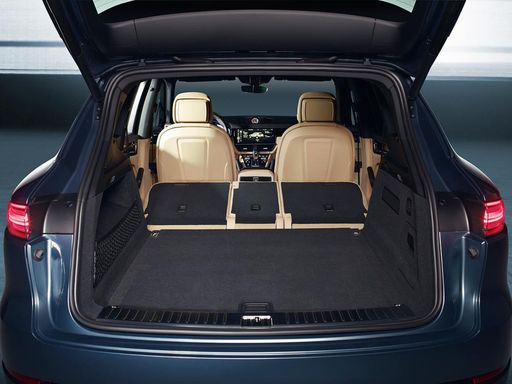
Porsche, a name synonymous with luxury, delivers the Cayenne with robust dimensions justifying its performance. It features a larger trunk space of up to 772 liters, perfect for family adventures or professional needs. Though it's a heavier set vehicle with a curb weight starting from 2130 kg, the luxury and comfort are unmatched, offering payload capacities up to 705 kg for those demanding more from their SUVs.

Seal U @ BYD Auto / BYD Global Media

Design and Comfort

Inside, the Seal U features a minimalist design with the focus on user comfort and intuitive technology integration, seating up to 5 passengers with ease. Modern infotainment and driver-assist features are bound to engage tech-savvy users.

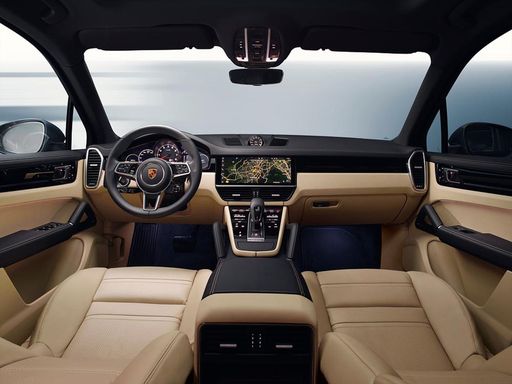
The Cayenne remains a symbol of opulence, with high-quality interiors and exceptional attention to detail. With variable seating up to 5, the premium craftsmanship and advanced technological gadgets offer an exquisite driving experience.

Cayenne @ Dr. Ing. h.c. F. Porsche AG

Conclusion

The BYD Seal U and Porsche Cayenne cater to distinct buyer tastes. The Seal U is perfect for those seeking a more environmentally-friendly and efficient choice without compromising on performance. In contrast, the Porsche Cayenne offers unrivaled luxury and performance prowess, making it the go-to option for driving enthusiasts not willing to sacrifice style or power.

Ultimately, the choice between these luxury SUVs will depend on personal preferences for efficiency, speed, design, and lifestyle needs. Each offers a unique experience with their exceptional attributes and cutting-edge technology, promising satisfaction for their owners.

Aquí vienen los hechos: las diferencias técnicas en detalle

Costes y consumo

El precio y la eficiencia suelen ser los primeros criterios. Aquí se ve qué modelo mantiene la ventaja a largo plazo, ya sea repostando, cargando o al comprar.

BYD Seal U tiene una ventaja claro en precio: parte desde 40700 €, mientras que el Porsche Cayenne cuesta 117800 €. La diferencia es de unos 77185 €.

También se aprecia una diferencia en el consumo: el BYD Seal U gasta 0.40 L y es significativo más eficiente que el Porsche Cayenne, que consume 4 L. La diferencia es de unos 3.60 L cada 100 km.

En autonomía, el BYD Seal U ofrece un rendimiento convincente mejor: alcanza hasta 500 km, unos 417 km más que el Porsche Cayenne.

Motor y rendimiento

Potencia, par motor y aceleración son las cifras clásicas para los amantes del motor – y aquí aparecen diferencias notables.

En cuanto a potencia, el Porsche Cayenne tiene una ventaja significativo: 739 HP frente a 324 HP. Eso supone un aumento de unos 415 HP CV.

En aceleración de 0 a 100 km/h, el Porsche Cayenne es decisivo más rápido: completa el sprint en 3.60 s, frente a 5.90 s del BYD Seal U. Es aproximadamente 2.30 s más veloz.

En velocidad máxima, el Porsche Cayenne es convincente superior – alcanza 305 km/h, mientras que el BYD Seal U se queda en 180 km/h. La diferencia es de unos 125 km/h.

También hay diferencias en el par motor: el Porsche Cayenne empuja decisivo con 950 Nm frente a 550 Nm. La diferencia ronda los 400 Nm.

Espacio y practicidad

Habitabilidad, maletero y carga útil determinan la funcionalidad en el día a día. Aquí cuentan la comodidad y la flexibilidad.

Ambos modelos ofrecen espacio suficiente para 5 personas.

En peso en vacío, el BYD Seal U es mínimo más ligero – 1940 kg frente a 2130 kg. La diferencia ronda los 190 kg.

En capacidad de maletero, el Porsche Cayenne ofrece evidente más espacio – 772 L frente a 552 L. La diferencia es de unos 220 L.

En capacidad máxima de carga, el Porsche Cayenne es un poco mejor – hasta 1708 L, unos 243 L más que el BYD Seal U.

En capacidad de carga útil, el Porsche Cayenne decisivo se impone – 705 kg frente a 410 kg. La diferencia es de unos 295 kg.

¿Quién gana la carrera?

El BYD Seal U resulta ser deja pocas opciones al rival y se convierte en nuestro ¡DriveDuel Champion!
En este comparativo, el BYD Seal U demuestra ser el modelo más completo.

desde aprox. 40.700 €
Seal U @ BYD Auto / BYD Global Media

BYD Seal U

  • Tipo de motor : Híbrido enchufable, Eléctrico
  • Transmisión : Automática
  • Tipo de tracción : Tracción delantera, Tracción total
  • Potencia HP : 218 - 324 HP
  • Consumo L/100km : 0.4 - 1.2 L
  • Consumo kWh/100km : 19.9 - 20.5 kWh
  • Autonomía eléctrica : 70 - 500 km

BYD Seal U

5 (1)
valorar

El BYD Seal U luce como un coupé moderno que no pasa desapercibido, con líneas limpias y un perfil dinámico que promete diversión sin complicaciones. Dentro sorprende por su ambiente cuidado y tecnología intuitiva, convirtiéndolo en una alternativa atractiva para quien quiere electrificación con carácter y sin dramas.

detalles

Porsche Cayenne

El Porsche Cayenne combina la fibra de un deportivo con la presencia y la versatilidad de un SUV premium, transformando cualquier trayecto en su territorio preferido. Si buscas lujo sin renunciar a la diversión al volante y un coche que impresione tanto por confort como por carácter, el Cayenne es una apuesta difícil de ignorar.

detalles
BYD Seal U
Porsche Cayenne
Seal U @ BYD Auto / BYD Global Media
Cayenne @ Dr. Ing. h.c. F. Porsche AG

Costos y consumo

Precio
40700 - 47300 €
Precio
117800 - 221200 €
Consumo L/100km
0.4 - 1.2 L
Consumo L/100km
4 - 12.2 L
Consumo kWh/100km
19.9 - 20.5 kWh
Consumo kWh/100km
-
Autonomía eléctrica
70 - 500 km
Autonomía eléctrica
74 - 83 km
Capacidad de la batería
-
Capacidad de la batería
21.80 kWh
co2
0 - 26 g/km
co2
90 - 277 g/km
Capacidad del tanque
60 L
Capacidad del tanque
70 - 90 L

Dimensiones y carrocería

Tipo de carrocería
SUV
Tipo de carrocería
SUV
Asientos
5
Asientos
4 - 5
Puertas
5
Puertas
5
Peso en vacío
1940 - 2147 kg
Peso en vacío
2130 - 2670 kg
Capacidad del maletero
425 - 552 L
Capacidad del maletero
434 - 772 L
Longitud
4775 - 4785 mm
Longitud
4930 mm
Anchura
1890 mm
Anchura
1983 - 1989 mm
Altura
1668 - 1670 mm
Altura
1652 - 1698 mm
Capacidad máxima del maletero
1440 - 1465 L
Capacidad máxima del maletero
1344 - 1708 L
Capacidad de carga
410 kg
Capacidad de carga
365 - 705 kg

Motor y rendimiento

Tipo de motor
Híbrido enchufable, Eléctrico
Tipo de motor
Gasolina, Híbrido enchufable
Transmisión
Automática
Transmisión
Automática
Detalle de transmisión
Transmisión CVT, Caja de reducción
Detalle de transmisión
Caja automática
Tipo de tracción
Tracción delantera, Tracción total
Tipo de tracción
Tracción total
Potencia HP
218 - 324 HP
Potencia HP
353 - 739 HP
Aceleración 0-100km/h
5.9 - 9.6 s
Aceleración 0-100km/h
3.6 - 6 s
Velocidad máxima
170 - 180 km/h
Velocidad máxima
248 - 305 km/h
Par motor
300 - 550 Nm
Par motor
500 - 950 Nm
Número de cilindros
4
Número de cilindros
6 - 8
Potencia kW
160 - 238 kW
Potencia kW
260 - 544 kW
Cilindrada
1497 - 1498 cm3
Cilindrada
2995 - 3996 cm3

General

Año del modelo
2024
Año del modelo
2025
Clase de eficiencia de CO2
B, A
Clase de eficiencia de CO2
G, B, C
Marca
BYD
Marca
Porsche
¿Qué tipos de tracción están disponibles para el BYD Seal U?

El BYD Seal U está disponible con tracción Tracción delantera o Tracción total.

Los precios y datos mostrados son estimaciones basadas en los precios de lista en Alemania y pueden variar según el país. Esta información no es legalmente vinculante.