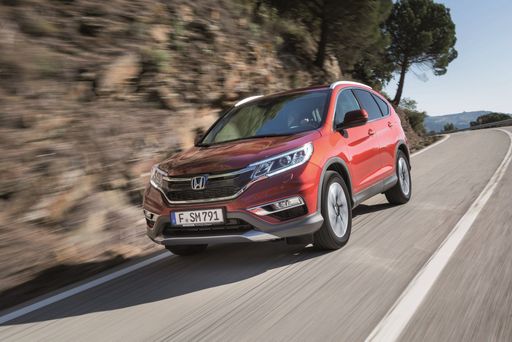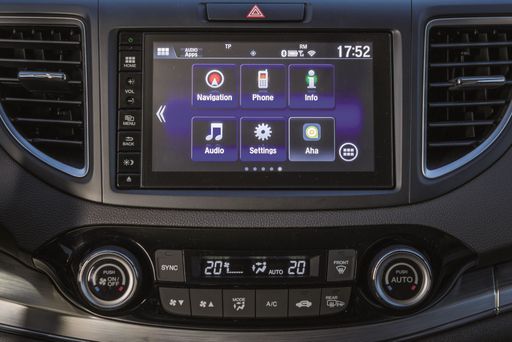
@ Honda Motor Co., Ltd.
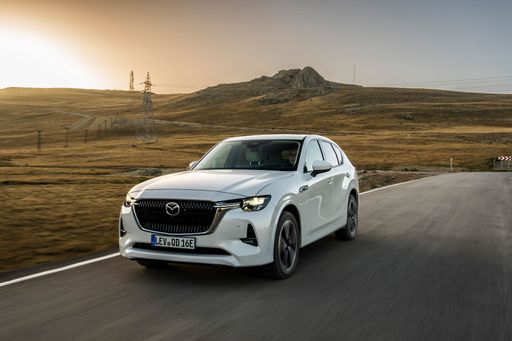
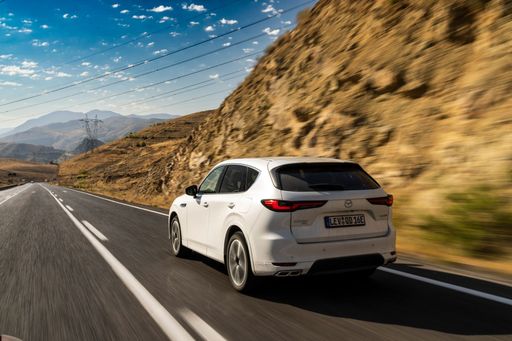
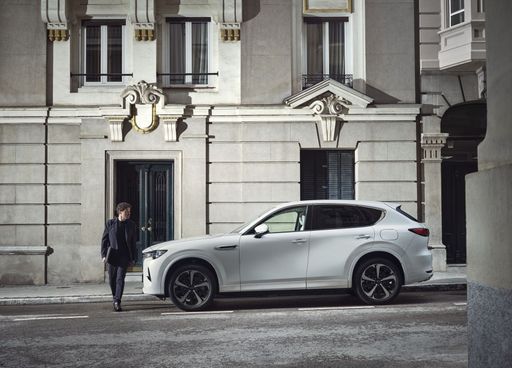
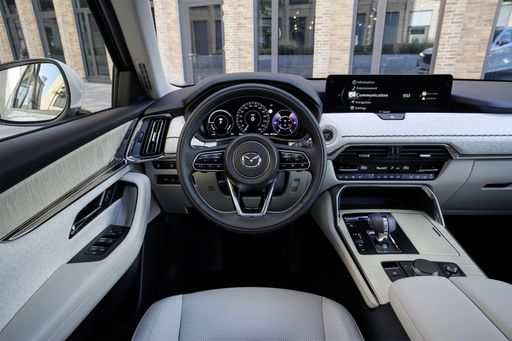
@ Mazda Motor Corporation
VS

Honda CR-V vs Mazda CX-60 – ¿Qué coche se adapta mejor a ti?

Ambos modelos tienen sus puntos fuertes – pero, ¿cuál es el adecuado para ti?
Compara directamente rendimiento, consumo, precio y espacio: Honda CR-V o Mazda CX-60?

CR-V @ Honda Motor Co., Ltd.

SUV Showdown: Honda CR-V vs. Mazda CX-60

As SUVs continue to conquer the automotive market with their blend of practicality and performance, two models stand out for the 2024 season: the Honda CR-V and the Mazda CX-60. Both vehicles are equipped with advanced features and innovative technology, catering to the tastes of discerning drivers. But how do these two SUVs stack up against each other? Let’s delve into the intricacies of their design, performance, and technology.

CX-60 @ Mazda Motor Corporation

Performance and Engine Options

The Honda CR-V and Mazda CX-60 offer a variety of engine choices, catering to different driving styles and preferences. The Honda CR-V comes with either a full hybrid or a plug-in hybrid engine. Its engine has a power output of 135 kW (184 HP), with a torque of 335 Nm. Performance-wise, it completes the 0-100 km/h dash in 9.5 seconds and boasts a top speed of 194 km/h. With a consumption of 6 L/100 km and an electric range extending up to 79 km, the CR-V combines efficiency with practicality.

In contrast, the Mazda CX-60 offers a stronger punch with its engine options, including a plug-in hybrid and a diesel mild hybrid. The most powerful variant delivers 327 HP (241 kW) and a hefty torque of 550 Nm. Notably quicker off the line, the CX-60 reaches 100 km/h in just 5.8 seconds and pushes up to a maximum speed of 219 km/h. With fuel consumption as low as 1.4 L/100 km, the CX-60 also offers impressive efficiency, but its electric range is slightly less at 64 km.

CR-V @ Honda Motor Co., Ltd.

Transmission and Drive Type

Both SUVs come equipped with automatic transmission systems designed for smooth and effortless driving. The Honda CR-V features a Continuously Variable Transmission (CVT), available in all-wheel drive and front-wheel drive configurations, providing flexibility depending on driving needs.

The Mazda CX-60, on the other hand, uses a conventional automatic gearbox and offers both all-wheel drive and rear-wheel drive options. This flexibility allows drivers to tailor their driving experience, whether they prioritize traction or enjoy a more performance-oriented feel with rear-wheel drive.

CX-60 @ Mazda Motor Corporation

Design Dimensions and Capacity

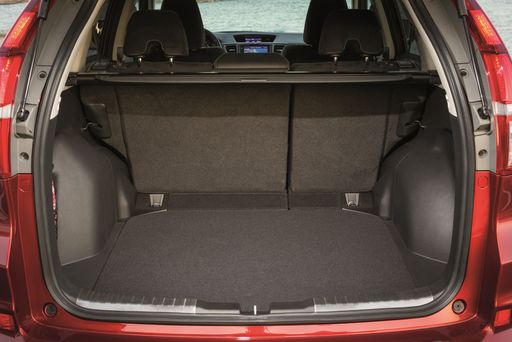
In terms of dimensions, the Honda CR-V measures 4706 mm in length, 1866 mm in width, and up to 1684 mm in height. It offers a substantial trunk capacity ranging from 579 to 617 liters, ensuring adequate space for family travels or grocery hauls.

Conversely, the Mazda CX-60 is slightly larger, measuring 4745 mm in length, 1890 mm in width, and up to 1688 mm in height. It offers a trunk capacity of 570 liters, which, while slightly less than the CR-V’s maximum, is still ample for most needs.

CR-V @ Honda Motor Co., Ltd.

Weight and Payload

Weight is an essential factor for driving dynamics and fuel efficiency. The CR-V’s curb weight ranges from 1821 to 1988 kg, and it supports a payload capacity between 439 to 475 kg. In comparison, the Mazda CX-60 weighs in between 1890 to 2055 kg, with an impressive payload capacity of up to 612 kg, allowing it to handle heavier loads with ease.

CX-60 @ Mazda Motor Corporation

Environmental Impact

The CO2 efficiency of both vehicles reflects their commitment to reducing environmental impact. The Honda CR-V is efficient, with emissions ranging from 18 to 152 g/km, depending on the model specification, and it falls within CO2 efficiency classes B to E.

The Mazda CX-60 exhibits exceptional environmental performance in its plug-in hybrid configuration, boasting as low as 31 g/km of CO2 emissions and classification in efficiency classes B and D.

CR-V @ Honda Motor Co., Ltd.

Final Verdict

When comparing the Honda CR-V and Mazda CX-60, prospective buyers face a tough choice between these high-performance SUVs. The CR-V promises reliable efficiency, practicality, and a more conservative yet contemporary design. Meanwhile, the Mazda CX-60 stands out for its performance, luxury appeal, and exceptional payload capacity, all wrapped in a stylish package.

Ultimately, whether you choose the practical efficiency of the Honda CR-V or the high-octane charm of the Mazda CX-60, both models promise an elevated driving experience matched with innovative technology.

Aquí vienen los hechos: las diferencias técnicas en detalle

CX-60 @ Mazda Motor Corporation

Costes y consumo

En términos de economía diaria, ambos modelos muestran contrastes interesantes.

Mazda CX-60 tiene una ventaja apenas perceptible en precio: parte desde 49700 €, mientras que el Honda CR-V cuesta 53100 €. La diferencia es de unos 3437 €.

También se aprecia una diferencia en el consumo: el Honda CR-V gasta 0.90 L y es decisivo más eficiente que el Mazda CX-60, que consume 1.40 L. La diferencia es de unos 0.50 L cada 100 km.

En autonomía, el Honda CR-V ofrece un rendimiento algo mejor: alcanza hasta 79 km, unos 15 km más que el Mazda CX-60.

Motor y rendimiento

Debajo del capó se descubre qué modelo tiene un carácter más deportivo y quién acelera mejor.

En cuanto a potencia, el Mazda CX-60 tiene una ventaja claro: 327 HP frente a 184 HP. Eso supone un aumento de unos 143 HP CV.

En aceleración de 0 a 100 km/h, el Mazda CX-60 es decisivo más rápido: completa el sprint en 5.80 s, frente a 9 s del Honda CR-V. Es aproximadamente 3.20 s más veloz.

En velocidad máxima, el Mazda CX-60 es un poco superior – alcanza 219 km/h, mientras que el Honda CR-V se queda en 195 km/h. La diferencia es de unos 24 km/h.

También hay diferencias en el par motor: el Mazda CX-60 empuja claramente perceptible con 550 Nm frente a 335 Nm. La diferencia ronda los 215 Nm.

Espacio y practicidad

Habitabilidad, maletero y carga útil determinan la funcionalidad en el día a día. Aquí cuentan la comodidad y la flexibilidad.

Ambos modelos ofrecen espacio suficiente para 5 personas.

En peso en vacío, el Honda CR-V es ligero más ligero – 1821 kg frente a 1890 kg. La diferencia ronda los 69 kg.

En capacidad de maletero, el Honda CR-V ofrece apenas perceptible más espacio – 617 L frente a 570 L. La diferencia es de unos 47 L.

En capacidad máxima de carga, el Mazda CX-60 es ligero mejor – hasta 1726 L, unos 16 L más que el Honda CR-V.

En capacidad de carga útil, el Mazda CX-60 notable se impone – 612 kg frente a 475 kg. La diferencia es de unos 137 kg.

¿Quién es el ganador del duelo?

En general, el Mazda CX-60 se muestra supera en casi todos los aspectos y se lleva el título de DriveDuel Champion.
Destaca por su equilibrio general y por ser el compañero más versátil en el día a día.

desde aprox. 49.700 €
CX-60 @ Mazda Motor Corporation

Mazda CX-60

  • Tipo de motor : Híbrido enchufable, Híbrido ligero diésel
  • Transmisión : Automática
  • Tipo de tracción : Tracción total, Tracción trasera
  • Potencia HP : 200 - 327 HP
  • Consumo L/100km : 1.4 - 5.4 L
  • Autonomía eléctrica : 64 km

Honda CR-V

5 (1)
valorar

La Honda CR-V se presenta como una compañera fiable y práctica, con un equilibrio entre confort diario y versatilidad para escapadas de fin de semana. Es un SUV que no busca acaparar miradas, pero sí ganarse tu confianza con sensatez y sin complicaciones.

detalles

Mazda CX-60

5 (1)
valorar

El Mazda CX-60 combina una estética elegante y una presencia en carretera que invita a tomar el volante y no soltarlo. Su interior transmite sensaciones premium sin ostentación, y su puesta a punto logra arrancar una sonrisa en cada curva sin complicar la vida cotidiana.

detalles
Honda CR-V
Mazda CX-60
CR-V @ Honda Motor Co., Ltd.
CX-60 @ Mazda Motor Corporation

Costos y consumo

Precio
53100 - 62700 €
Precio
49700 - 70600 €
Consumo L/100km
0.9 - 6.7 L
Consumo L/100km
1.4 - 5.4 L
Consumo kWh/100km
-
Consumo kWh/100km
-
Autonomía eléctrica
79 km
Autonomía eléctrica
64 km
Capacidad de la batería
-
Capacidad de la batería
-
co2
19 - 152 g/km
co2
31 - 139 g/km
Capacidad del tanque
46 - 57 L
Capacidad del tanque
50 - 58 L

Dimensiones y carrocería

Tipo de carrocería
SUV
Tipo de carrocería
SUV
Asientos
5
Asientos
5
Puertas
5
Puertas
5
Peso en vacío
1821 - 1988 kg
Peso en vacío
1890 - 2055 kg
Capacidad del maletero
579 - 617 L
Capacidad del maletero
570 L
Longitud
4706 mm
Longitud
4745 mm
Anchura
1866 mm
Anchura
1890 mm
Altura
1673 - 1684 mm
Altura
1680 - 1688 mm
Capacidad máxima del maletero
1634 - 1710 L
Capacidad máxima del maletero
1726 L
Capacidad de carga
439 - 475 kg
Capacidad de carga
581 - 612 kg

Motor y rendimiento

Tipo de motor
Híbrido enchufable, Híbrido completo
Tipo de motor
Híbrido enchufable, Híbrido ligero diésel
Transmisión
Automática
Transmisión
Automática
Detalle de transmisión
Transmisión CVT
Detalle de transmisión
Caja automática
Tipo de tracción
Tracción delantera, Tracción total
Tipo de tracción
Tracción total, Tracción trasera
Potencia HP
184 HP
Potencia HP
200 - 327 HP
Aceleración 0-100km/h
9 - 9.5 s
Aceleración 0-100km/h
5.8 - 8.4 s
Velocidad máxima
187 - 195 km/h
Velocidad máxima
200 - 219 km/h
Par motor
335 Nm
Par motor
450 - 550 Nm
Número de cilindros
4
Número de cilindros
4 - 6
Potencia kW
135 kW
Potencia kW
147 - 241 kW
Cilindrada
1993 cm3
Cilindrada
2488 - 3283 cm3

General

Año del modelo
2024 - 2025
Año del modelo
2024
Clase de eficiencia de CO2
B, D, E
Clase de eficiencia de CO2
B, D, E
Marca
Honda
Marca
Mazda
¿Qué opciones de tracción tiene el Honda CR-V?

El Honda CR-V está disponible con tracción Tracción delantera o Tracción total.

Los precios y datos mostrados son estimaciones basadas en los precios de lista en Alemania y pueden variar según el país. Esta información no es legalmente vinculante.