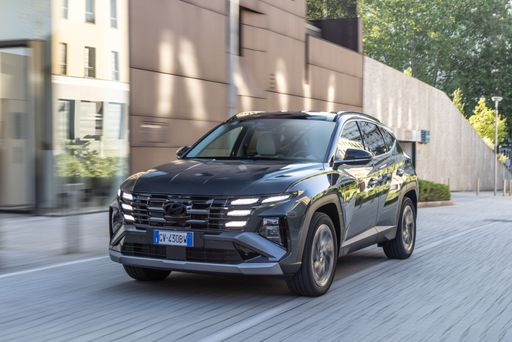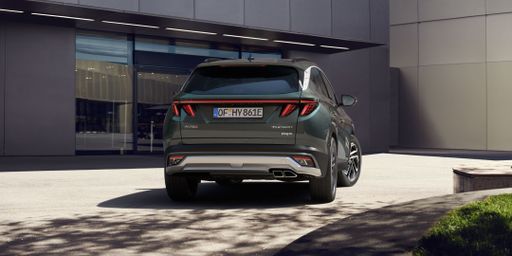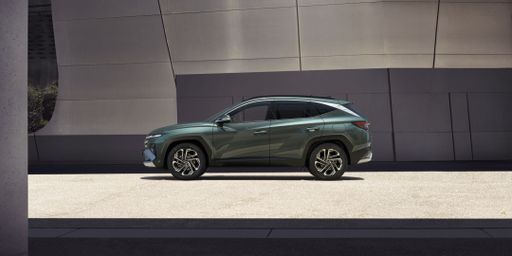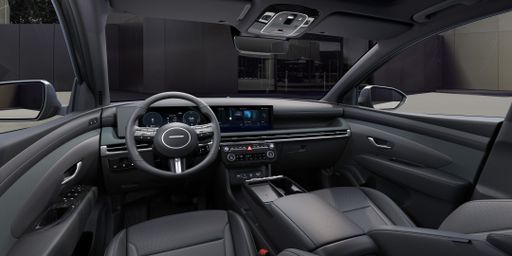
@ Hyundai Motor Company
@ Renault Group Media
VS

Hyundai Tucson vs Renault Austral – ¿Qué modelo convence más en el día a día?

Dos coches, un duelo: Hyundai Tucson se enfrenta a Renault Austral.
¿Quién gana en rendimiento, consumo y relación calidad-precio? ¡Descúbrelo ahora!

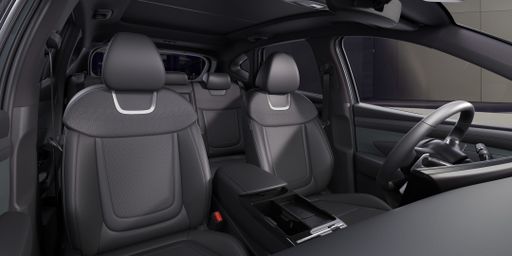
Tucson @ Hyundai Motor Company

Battle of the SUVs: Hyundai Tucson vs Renault Austral

In the ever-competitive SUV market, two standout contenders are grabbing the limelight: the Hyundai Tucson and the Renault Austral. As both make their marks in the 2024 lineup, these SUVs are much more than just family vehicles; they are technologically advanced machines ready to redefine the driving experience. Let's dive into a detailed comparison of these two impressive vehicles.

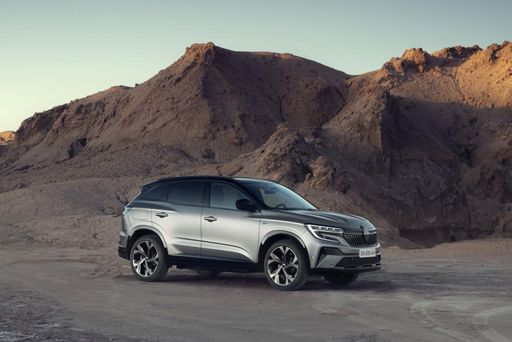
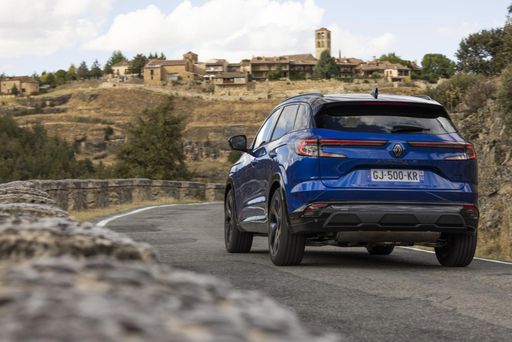
Austral @ Renault Group Media

Engine Performance and Efficiency

Both the Hyundai Tucson and Renault Austral offer a variety of engine options, catering to the diverse demands of the modern driver. The Tucson is particularly versatile with its wide range of powertrains, including Diesel MHEV, Petrol MHEV, Full Hybrid, and Plugin Hybrid options. It boasts power figures reaching up to 252 HP, coupled with all-wheel drive capabilities on select variants, a clear advantage for those seeking power and traction.

In contrast, the Renault Austral focuses on petrol-driven efficiency with its Petrol MHEV and Full Hybrid systems. It delivers a maximum of 200 HP, which, while slightly less powerful than the Tucson's top offerings, is backed by an impressive consumption rate as low as 4.7 L/100 km for the Full Hybrid variant. The Austral shines with its emphasis on fuel economy, making it a strong contender for eco-conscious drivers.

Tucson @ Hyundai Motor Company

Driving Dynamics and Handling

The Hyundai Tucson offers both automatic and manual transmission options, including a Dual-Clutch Automatic that caters to driving enthusiasts seeking a sportier feel. With its capable front-wheel and all-wheel drive systems, the Tucson promises versatile handling that adjusts to different driving conditions, whether navigating city streets or tackling off-road paths. It accelerates from 0-100 km/h in as fast as 7.9 seconds, providing a balanced blend of speed and control.

Renault Austral, with its focus on simplicity and efficiency, provides an automatic transmission setup via its continuously variable transmission (CVT) as well as a traditional automatic gearbox. Its front-wheel-drive configuration aligns well with the brand's emphasis on urban-centric driving dynamics. The Austral covers 0-100 km/h in 8.4 seconds, slightly less brisk but still commendable for its segment.

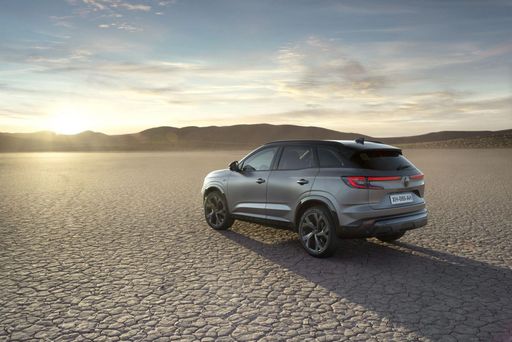
Austral @ Renault Group Media

Design and Dimensions

Aesthetic appeal and utility come together in the design of both SUVs. The Hyundai Tucson boasts dimensions of 4510 mm in length, 1865 mm in width, and 1650 mm in height, offering a spacious interior with a trunk capacity of up to 620 liters. It's designed for those who need practicality without sacrificing style.

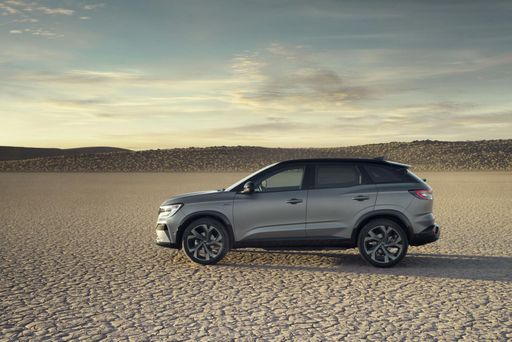
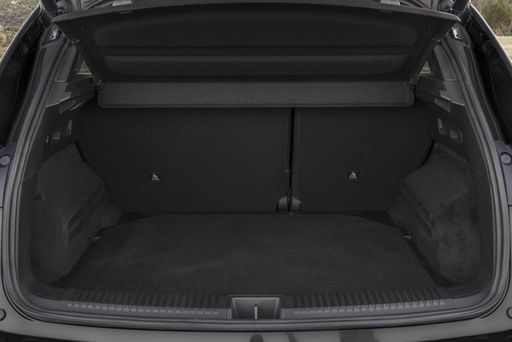
The Renault Austral matches closely with a 4510 mm length and a more compact width of 1825 mm, allowing for easier maneuverability in tight urban settings. It features a trunk capacity maxing out at 500 liters, which is slightly lesser than the Tucson but still adequate for daily use and weekend getaways.

Tucson @ Hyundai Motor Company

Innovations and Feature Highlights

Hyundai has incorporated an array of advanced features in the Tucson, focusing on both safety and entertainment. Its higher ground clearance combined with driver-assist technologies like forward collision-avoidance assist and blind-spot monitoring ensures a secure ride. The infotainment system supports seamless connectivity and voice control, providing both comfort and convenience.

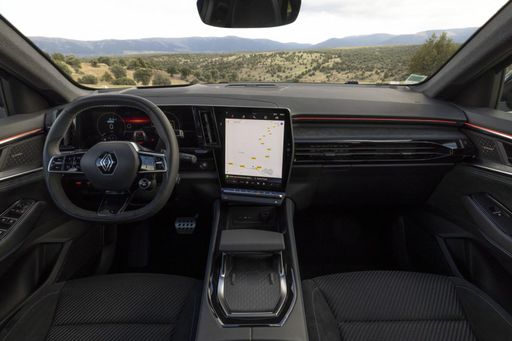
Renault Austral packages its innovative spirit in technology-led and sustainable solutions. The interior is crafted with high-quality materials and houses a digital cockpit dominated by a large central screen, enhancing the user interface experience. Austral also prioritizes efficiency and emissions reduction, evident in its CO2 output as low as 105 g/km, appealing to eco-friendly consumers.

Austral @ Renault Group Media

Final Verdict

When comparing the Hyundai Tucson and Renault Austral, your choice boils down to performance preferences and lifestyle needs. The Tucson is the go-to for comprehensive powertrain options and a more robust driving feel, especially for those who appreciate the flexibility of all-wheel drive and varied powertrains. On the other hand, the Austral shines in its fuel efficiency, intuitive tech features, and urban-friendly drivability, making it an attractive choice for city-savvy drivers concerned with economy and emissions.

Both models epitomize the best of what modern SUVs can offer, ensuring that whether you opt for the Hyundai Tucson or the Renault Austral, you will drive away in a vehicle that marries comfort, innovation, and performance seamlessly.

Aquí vienen los hechos: las diferencias técnicas en detalle

Tucson @ Hyundai Motor Company

Costes y consumo

En términos de economía diaria, ambos modelos muestran contrastes interesantes.

Renault Austral tiene una ventaja apenas perceptible en precio: parte desde 37000 €, mientras que el Hyundai Tucson cuesta 39900 €. La diferencia es de unos 2924 €.

También se aprecia una diferencia en el consumo: el Hyundai Tucson gasta 1 L y es convincente más eficiente que el Renault Austral, que consume 4.80 L. La diferencia es de unos 3.80 L cada 100 km.

Austral @ Renault Group Media

Motor y rendimiento

Debajo del capó se descubre qué modelo tiene un carácter más deportivo y quién acelera mejor.

En cuanto a potencia, el Hyundai Tucson tiene una ventaja claramente perceptible: 252 HP frente a 200 HP. Eso supone un aumento de unos 52 HP CV.

En aceleración de 0 a 100 km/h, el Hyundai Tucson es casi imperceptible más rápido: completa el sprint en 7.90 s, frente a 8.40 s del Renault Austral. Es aproximadamente 0.50 s más veloz.

En velocidad máxima, el Hyundai Tucson es en pequeña medida superior – alcanza 204 km/h, mientras que el Renault Austral se queda en 180 km/h. La diferencia es de unos 24 km/h.

También hay diferencias en el par motor: el Hyundai Tucson empuja evidente con 379 Nm frente a 270 Nm. La diferencia ronda los 109 Nm.

Tucson @ Hyundai Motor Company

Espacio y practicidad

Habitabilidad, maletero y carga útil determinan la funcionalidad en el día a día. Aquí cuentan la comodidad y la flexibilidad.

Ambos modelos ofrecen espacio suficiente para 5 personas.

En peso en vacío, el Renault Austral es casi imperceptible más ligero – 1539 kg frente a 1542 kg. La diferencia ronda los 3 kg.

En capacidad de maletero, el Hyundai Tucson ofrece en pequeña medida más espacio – 620 L frente a 555 L. La diferencia es de unos 65 L.

En capacidad máxima de carga, el Hyundai Tucson es mínimo mejor – hasta 1799 L, unos 38 L más que el Renault Austral.

En capacidad de carga útil, el Hyundai Tucson en pequeña medida se impone – 545 kg frente a 477 kg. La diferencia es de unos 68 kg.

¿Quién es el ganador del duelo?

En general, el Hyundai Tucson se muestra deja pocas opciones al rival y se lleva el título de DriveDuel Champion.
Destaca por su equilibrio general y por ser el compañero más versátil en el día a día.

desde aprox. 39.900 €
Tucson @ Hyundai Motor Company

Hyundai Tucson

  • Tipo de motor : Híbrido ligero diésel, Híbrido enchufable, Gasolina, Híbrido completo
  • Transmisión : Automática, Manuel
  • Tipo de tracción : Tracción delantera, Tracción total
  • Potencia HP : 136 - 252 HP
  • Consumo L/100km : 1 - 7.6 L
  • Autonomía eléctrica : 64 - 70 km

Hyundai Tucson

5 (2)
valorar

El Hyundai Tucson combina un diseño moderno y audaz con una conducción cómoda que se adapta bien tanto a la ciudad como a viajes más largos. Es una opción sensata para quien busca espacio práctico, tecnología fácil de usar y una presencia en la carretera que no pasa desapercibida, todo sin complicaciones innecesarias.

detalles

Renault Austral

5 (2)
valorar

El Renault Austral llega como un SUV que combina estilo y funcionalidad, pensado para quien busca confort diario sin renunciar a presencia en la ciudad. Su habitáculo bien rematado y la dotación tecnológica lo convierten en una opción atractiva para familias y conductores exigentes, además de añadir ese guiño francés que siempre suma encanto.

detalles
Hyundai Tucson
Renault Austral
Tucson @ Hyundai Motor Company
Austral @ Renault Group Media

Costos y consumo

Precio
39900 - 55300 €
Precio
37000 - 44900 €
Consumo L/100km
1 - 7.6 L
Consumo L/100km
4.8 - 6.5 L
Consumo kWh/100km
-
Consumo kWh/100km
-
Autonomía eléctrica
64 - 70 km
Autonomía eléctrica
-
Capacidad de la batería
-
Capacidad de la batería
-
co2
22 - 172 g/km
co2
109 - 148 g/km
Capacidad del tanque
42 - 54 L
Capacidad del tanque
55 L

Dimensiones y carrocería

Tipo de carrocería
SUV
Tipo de carrocería
SUV
Asientos
5
Asientos
5
Puertas
5
Puertas
5
Peso en vacío
1542 - 1889 kg
Peso en vacío
1539 - 1613 kg
Capacidad del maletero
546 - 620 L
Capacidad del maletero
527 - 555 L
Longitud
4510 - 4535 mm
Longitud
4533 mm
Anchura
1865 mm
Anchura
1825 mm
Altura
1650 mm
Altura
1645 mm
Capacidad máxima del maletero
1721 - 1799 L
Capacidad máxima del maletero
1736 - 1761 L
Capacidad de carga
523 - 545 kg
Capacidad de carga
464 - 477 kg

Motor y rendimiento

Tipo de motor
Híbrido ligero diésel, Híbrido enchufable, Gasolina, Híbrido completo
Tipo de motor
Híbrido ligero gasolina, Híbrido completo
Transmisión
Automática, Manuel
Transmisión
Automática
Detalle de transmisión
Automático de doble embrague, Caja automática, Caja manual
Detalle de transmisión
Transmisión CVT, Caja automática
Tipo de tracción
Tracción delantera, Tracción total
Tipo de tracción
Tracción delantera
Potencia HP
136 - 252 HP
Potencia HP
158 - 200 HP
Aceleración 0-100km/h
7.9 - 11.6 s
Aceleración 0-100km/h
8.4 - 9.7 s
Velocidad máxima
180 - 204 km/h
Velocidad máxima
180 km/h
Par motor
250 - 379 Nm
Par motor
270 Nm
Número de cilindros
4
Número de cilindros
3 - 4
Potencia kW
100 - 185 kW
Potencia kW
116 - 147 kW
Cilindrada
1598 cm3
Cilindrada
1199 - 1332 cm3

General

Año del modelo
2024 - 2025
Año del modelo
2025
Clase de eficiencia de CO2
E, B, F, D
Clase de eficiencia de CO2
E, C
Marca
Hyundai
Marca
Renault
¿Qué tipos de tracción están disponibles para el Hyundai Tucson?

Disponible con Tracción delantera o Tracción total.

Los precios y datos mostrados son estimaciones basadas en los precios de lista en Alemania y pueden variar según el país. Esta información no es legalmente vinculante.