
 Deutschland
 France
 Nederland
 Great Britain
 Sverige
 Danmark
 Suomi
Suomi Italia
 Polska
 Česko
Česko España
VS
VW ID. Buzz Cargo vs Kia PV5 comparativa
Compara la potencia (340 CV vs 163 CV), el maletero y el precio (51.700 € vs 38.900 € ) de un vistazo. Descubre cuál es la mejor opción para ti: VW ID. Buzz Cargo o Kia PV5.
VW ID. Buzz Cargo vs Kia PV5: las principales diferencias
ID. Buzz Cargo
Costes y consumo
En términos de economía diaria, ambos modelos muestran contrastes interesantes.
El Kia PV5 es notablemente más barato: parte desde 38.900 € , mientras que el VW ID. Buzz Cargo cuesta 51.700 € . La diferencia es de unos 12.746 €.
En consumo eléctrico, el Kia PV5 es muy ligeramente más eficiente: consume 19 kWh/100km frente a los 19,2 kWh/100km del VW ID. Buzz Cargo. La diferencia ronda los 0,2 kWh/100km.
En cuanto a la autonomía eléctrica, el VW ID. Buzz Cargo ofrece marginalmente más autonomía: alcanza hasta 455 km, unos 39 km más que el Kia PV5.
PV5
Motor y rendimiento
Potencia, par motor y aceleración dicen mucho sobre la experiencia de conducción. Aquí se ve cuál ofrece más dinamismo.
En potencia, el VW ID. Buzz Cargo ofrece significativamente más potencia: 340 CV frente a 163 CV. Eso supone unos 177 CV de diferencia.
También hay diferencias en el par motor: el VW ID. Buzz Cargo ofrece de forma notable más par, con 679 Nm frente a 250 Nm. La diferencia ronda los 429 Nm.
ID. Buzz Cargo
Espacio y practicidad
Más allá del rendimiento, el confort y el espacio interior son clave. Aquí se decide cuál es más práctico y versátil.
Plazas: el Kia PV5 ofrece más plazas – 5 frente a 3.
En el peso en vacío, el Kia PV5 es de forma evidente más ligero – 1.860 kg frente a 2.264 kg. La diferencia ronda los 404 kg.
En carga útil, el Kia PV5 ofrece muy ligeramente más capacidad – 790 kg frente a 753 kg. La diferencia es de unos 37 kg.
¿Quién gana la carrera en el análisis de datos?
VW ID. Buzz Cargo domina la comparación en la comparación objetiva de datos.
Esta evaluación solo muestra qué modelo obtiene más puntos sobre el papel – no cuál de los dos coches se siente adecuado para ti.
desde 51.700 €
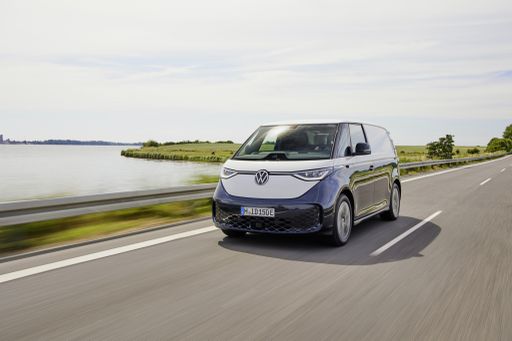
VW ID. Buzz Cargo
VW ID. Buzz Cargo
Kia PV5
Costos y consumo
Ver análisis detallado
Ver análisis detallado
Motor y rendimiento
Ver análisis detallado
Ver análisis detallado
Dimensiones y carrocería
Ver análisis detallado
Ver análisis detallado
VW ID. Buzz Cargo
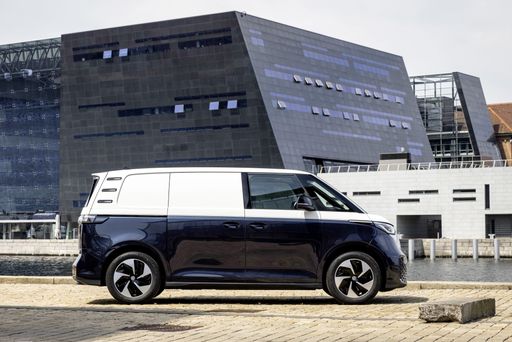
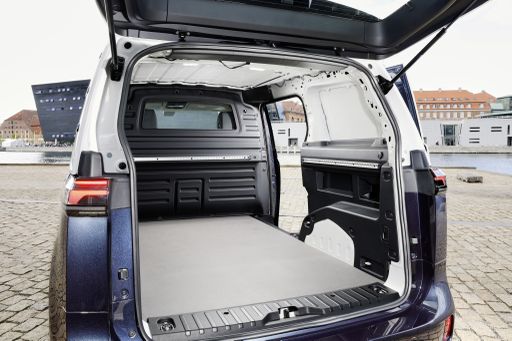
El ID. Buzz Cargo de Volkswagen trae la silueta nostálgica de la clásica furgoneta al mundo eléctrico con una propuesta práctica y muy urbana que no pasa desapercibida. Ideal para pymes y repartidores que buscan una imagen moderna y costes de uso contenidos, ofrece una carga útil versátil y una conducción cómoda que facilita el día a día.
detalles
Kia PV5
El Kia PV5 llega con líneas modernas y una propuesta eléctrica pensada tanto para la ciudad como para escapadas de fin de semana; su imagen fresca y ordenada oculta un interior sorprendentemente práctico para el día a día. Con carácter cómodo y fácil de conducir, es una opción sensata para quien quiere dar el salto a la movilidad eléctrica sin dramas ni concesiones al estilo.
detalles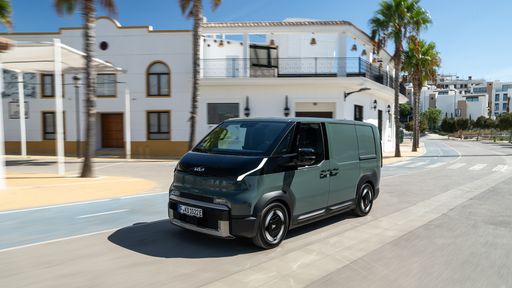
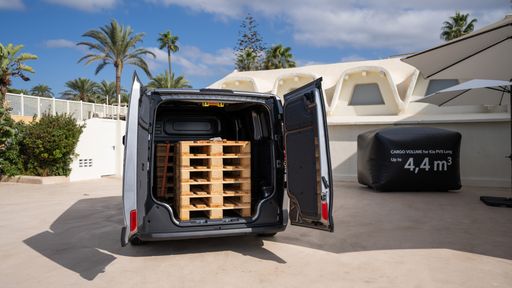


VW ID. Buzz Cargo
Kia PV5
Costos y consumo |
|
|---|---|
|
Precio
51.700 - 60.900 €
|
Precio
38.900 - 46.200 €
|
|
Consumo L/100km
-
|
Consumo L/100km
-
|
|
Consumo kWh/100km
19,2 - 20,3 kWh/100km
|
Consumo kWh/100km
19 - 19,3 kWh/100km
|
|
Autonomía eléctrica
330 - 455 km
|
Autonomía eléctrica
295 - 416 km
|
|
Capacidad de la batería
59 - 79 kWh
|
Capacidad de la batería
-
|
|
co2
0 g/km
|
co2
0 g/km
|
|
Capacidad del tanque
-
|
Capacidad del tanque
-
|
Dimensiones y carrocería |
|
|---|---|
|
Tipo de carrocería
Furgoneta de carga
|
Tipo de carrocería
Furgoneta de carga, Autobús
|
|
Asientos
3
|
Asientos
2 - 5
|
|
Puertas
4
|
Puertas
-
|
|
Peso en vacío
2.264 - 2.510 kg
|
Peso en vacío
1.860 - 2.145 kg
|
|
Capacidad del maletero
-
|
Capacidad del maletero
1.330 L
|
|
Longitud
4.712 mm
|
Longitud
-
|
|
Anchura
1.985 mm
|
Anchura
1.895 mm
|
|
Altura
1.932 mm
|
Altura
-
|
|
Capacidad máxima del maletero
3.900 L
|
Capacidad máxima del maletero
-
|
|
Capacidad de carga
640 - 753 kg
|
Capacidad de carga
455 - 790 kg
|
Motor y rendimiento |
|
|---|---|
|
Tipo de motor
Eléctrico
|
Tipo de motor
Eléctrico
|
|
Transmisión
Automática
|
Transmisión
Automática
|
|
Detalle de transmisión
-
|
Detalle de transmisión
Caja de reducción
|
|
Tipo de tracción
Tracción trasera, Tracción total
|
Tipo de tracción
Tracción delantera
|
|
Potencia CV
170 - 340 CV
|
Potencia CV
121 - 163 CV
|
|
Aceleración 0-100km/h
-
|
Aceleración 0-100km/h
10,6 - 16,2 s
|
|
Velocidad máxima
145 - 160 km/h
|
Velocidad máxima
-
|
|
Par motor
310 - 679 Nm
|
Par motor
250 Nm
|
|
Número de cilindros
-
|
Número de cilindros
-
|
|
Potencia kW
125 - 250 kW
|
Potencia kW
89 - 120 kW
|
|
Cilindrada
-
|
Cilindrada
-
|
General |
|
|---|---|
|
Año del modelo
2024
|
Año del modelo
2025
|
|
Clase de eficiencia de CO2
A
|
Clase de eficiencia de CO2
A
|
|
Marca
VW
|
Marca
Kia
|
DriveDuel utiliza análisis de datos e inteligencia artificial para evaluar datos de vehículos y crear contenidos. Los contenidos se revisan y mejoran regularmente.
Los precios mostrados son estimaciones basadas en los precios de lista alemanes, ajustados al IVA del país correspondiente. Los impuestos de matriculación específicos de cada país no están incluidos. Esta información no es legalmente vinculante.