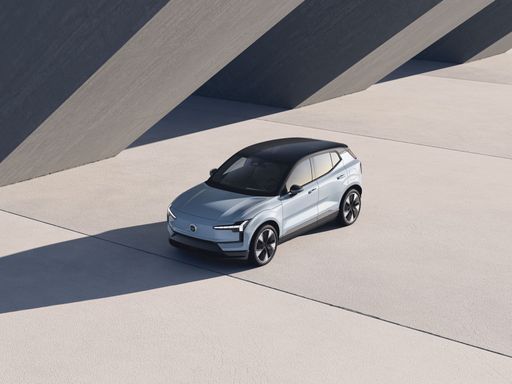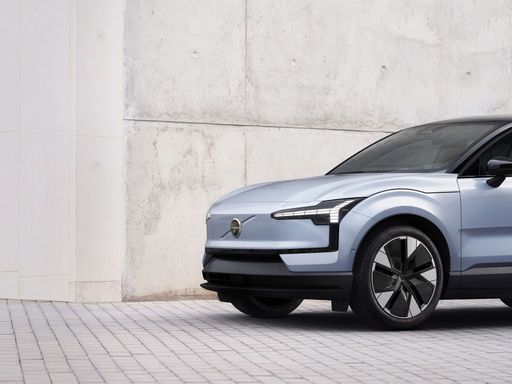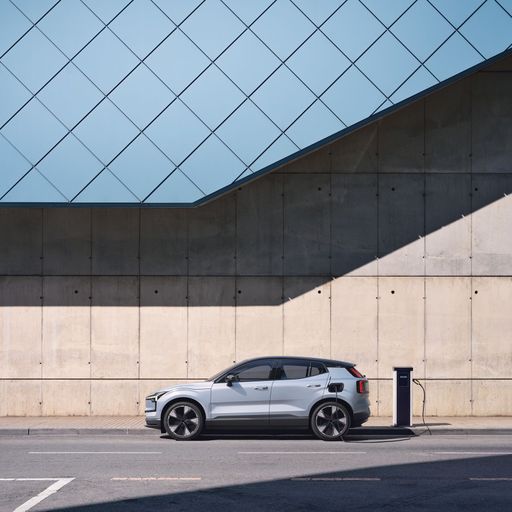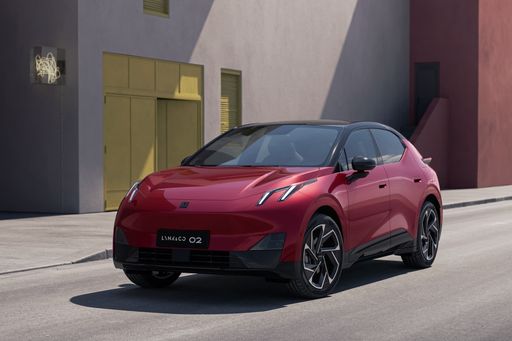
@ Volvo Cars
VS

Volvo EX30 vs Lynk & Co 02 – ¿Cuál es la mejor opción?

Dos coches, un duelo: Volvo EX30 se enfrenta a Lynk & Co 02.
¿Quién gana en rendimiento, consumo y relación calidad-precio? ¡Descúbrelo ahora!

EX30 @ Volvo Cars

The Battle of Compact Electric SUVs: Volvo EX30 vs. Lynk & Co 02

In the increasingly competitive world of electric vehicles, compact SUVs have become the battleground for innovation and efficiency. Two compelling contenders in this space are the Volvo EX30 and the Lynk & Co 02. These vehicles not only embody cutting-edge technology but also cater to environmentally conscious consumers. Let's dive into their technical aspects, innovations, and how they stand against each other.

EX30 @ Volvo Cars

Design and Dimensions: A Look at Aesthetics and Practicality

The Volvo EX30 and Lynk & Co 02 are designed to please both the eye and the practical-minded driver. The EX30 measures 4233 mm in length, 1837 mm in width, and a height range of 1549 to 1567 mm. It offers a trunk capacity of 318 liters. In contrast, the Lynk & Co 02 stands slightly taller and longer, with dimensions of 4460 mm in length, 1845 mm in width, and a consistent height of 1573 mm, paired with a more spacious trunk capacity of 440 liters.

EX30 @ Volvo Cars

Power, Performance, and Efficiency: A Comparison of Electric Might

Under the hood, or rather beneath the chassis, both vehicles boast impressive electric engines. The Volvo EX30 offers considerable flexibility with two powertrain options: a 272 HP rear-wheel drive and a high-performance 428 HP all-wheel drive variant. The vehicle offers an acceleration range from 0 to 100 km/h between an impressive 3.6 to 5.7 seconds, depending on the powertrain configuration.

The Lynk & Co 02 keeps it straightforward with a single 272 HP rear-wheel-drive setup, achieving the 0 to 100 km/h sprint in 5.5 seconds, closely aligning with the EX30's entry-level performance. Both SUVs share a top speed of 180 km/h.

In terms of efficiency, the Volvo EX30 consumes between 17 to 18.7 kWh/100 km, supporting ranges from 339 to 476 km, thanks to its 49 to 65 kWh battery capacity. Meanwhile, the Lynk & Co 02 delivers slightly better range efficiency at 17.1 to 17.6 kWh/100 km and a driving range between 435 and 445 km.

EX30 @ Volvo Cars

Interior and Technology: Innovation Inside

Both the Volvo EX30 and Lynk & Co 02 are designed with modern drivers in mind, providing seating for five and a suite of advanced technologies. Volvo’s hallmark lies in its seamless integration of safety and convenience features, while Lynk & Co takes the approach of connectivity and user-friendly technology to new heights.

Volvo's offering is notable for its advanced ergonomic design and high-quality material selections. On the other hand, Lynk & Co prides itself on offering flexibility, such as subscription models for ownership, which can be appealing to tech-savvy and younger audiences. Both cars feature advanced driver-assist technologies and infotainment systems designed for the modern road.

EX30 @ Volvo Cars

Conclusion: A Matter of Preference

The choice between the Volvo EX30 and Lynk & Co 02 boils down to personal preference and priorities. If a more dynamic performance and the prestige of a storied brand like Volvo appeal to you, the EX30 may be your ideal choice. However, if cutting-edge connectivity, practicality, and slightly better range are more in tune with your lifestyle, then the Lynk & Co 02 stands as an enticing alternative.

In the end, both vehicles represent the future of automotive innovation, offering something unique for different kinds of drivers. The decision will ultimately rest with those behind the wheel, navigating the electrified roads of tomorrow.

Aquí vienen los hechos: las diferencias técnicas en detalle

Costes y consumo

El precio y la eficiencia suelen ser los primeros criterios. Aquí se ve qué modelo mantiene la ventaja a largo plazo, ya sea repostando, cargando o al comprar.

Lynk & Co 02 tiene una ventaja casi imperceptible en precio: parte desde 36600 €, mientras que el Volvo EX30 cuesta 39100 €. La diferencia es de unos 2537 €.

En consumo eléctrico, la ventaja es para el Volvo EX30: con 17 kWh cada 100 km, es apenas perceptible más eficiente que el Lynk & Co 02, que necesita 17.10 kWh. La diferencia ronda los 0.10 kWh.

En autonomía, el Volvo EX30 ofrece un rendimiento mínimo mejor: alcanza hasta 476 km, unos 31 km más que el Lynk & Co 02.

Motor y rendimiento

Potencia, par motor y aceleración son las cifras clásicas para los amantes del motor – y aquí aparecen diferencias notables.

En cuanto a potencia, el Volvo EX30 tiene una ventaja claramente perceptible: 428 HP frente a 272 HP. Eso supone un aumento de unos 156 HP CV.

En aceleración de 0 a 100 km/h, el Volvo EX30 es significativo más rápido: completa el sprint en 3.60 s, frente a 5.50 s del Lynk & Co 02. Es aproximadamente 1.90 s más veloz.

No hay diferencias en velocidad punta – ambos alcanzan 180 km/h.

También hay diferencias en el par motor: el Volvo EX30 empuja convincente con 543 Nm frente a 323 Nm. La diferencia ronda los 220 Nm.

Espacio y practicidad

Ya sea coche familiar o compañero diario – ¿cuál ofrece más espacio, flexibilidad y confort?

Ambos modelos ofrecen espacio suficiente para 5 personas.

En peso en vacío, el Volvo EX30 es ligero más ligero – 1840 kg frente a 1895 kg. La diferencia ronda los 55 kg.

En capacidad de maletero, el Lynk & Co 02 ofrece notable más espacio – 410 L frente a 318 L. La diferencia es de unos 92 L.

En capacidad máxima de carga, el Lynk & Co 02 es claramente perceptible mejor – hasta 1349 L, unos 349 L más que el Volvo EX30.

En capacidad de carga útil, el Volvo EX30 ligero se impone – 390 kg frente a 375 kg. La diferencia es de unos 15 kg.

¿Quién es el ganador del duelo?

En general, el Volvo EX30 se muestra deja pocas opciones al rival y se lleva el título de DriveDuel Champion.
Destaca por su equilibrio general y por ser el compañero más versátil en el día a día.

desde aprox. 39.100 €
EX30 @ Volvo Cars

Volvo EX30

  • Tipo de motor : Eléctrico
  • Transmisión : Automática
  • Tipo de tracción : Tracción trasera, Tracción total
  • Potencia HP : 272 - 428 HP
  • Consumo kWh/100km : 17 - 18.7 kWh
  • Autonomía eléctrica : 339 - 476 km

Volvo EX30

El Volvo EX30 llega como el eléctrico urbano que no sacrifica la sensación premium: compacto, ágil y con un diseño que mezcla modernidad y elegancia escandinava. Perfecto para quienes buscan un coche práctico para la ciudad sin renunciar al estilo y a la tecnología intuitiva —además, tiene ese puntito divertido que convierte los recados en pequeñas escapadas.

detalles

Lynk & Co 02

El Lynk & Co 02 se presenta como un SUV compacto con actitud, combinando un diseño audaz y detalles modernos que no pasan desapercibidos en la calle. Ofrece una experiencia de conducción ágil y conectividad pensada para el usuario, perfecto para quien busca personalidad y practicidad sin complicarse la vida —y además tiene el estilo suficiente para arrancar miradas en cada semáforo.

detalles
Volvo EX30
Lynk & Co 02
EX30 @ Volvo Cars

Costos y consumo

Precio
39100 - 58300 €
Precio
36600 - 40700 €
Consumo L/100km
-
Consumo L/100km
-
Consumo kWh/100km
17 - 18.7 kWh
Consumo kWh/100km
17.1 - 17.6 kWh
Autonomía eléctrica
339 - 476 km
Autonomía eléctrica
435 - 445 km
Capacidad de la batería
49 - 65 kWh
Capacidad de la batería
-
co2
0 g/km
co2
0 g/km
Capacidad del tanque
-
Capacidad del tanque
-

Dimensiones y carrocería

Tipo de carrocería
SUV
Tipo de carrocería
SUV
Asientos
5
Asientos
5
Puertas
5
Puertas
5
Peso en vacío
1840 - 1960 kg
Peso en vacío
1895 kg
Capacidad del maletero
318 L
Capacidad del maletero
410 L
Longitud
4233 mm
Longitud
4460 mm
Anchura
1838 mm
Anchura
1845 mm
Altura
1550 - 1567 mm
Altura
1573 mm
Capacidad máxima del maletero
1000 L
Capacidad máxima del maletero
1349 L
Capacidad de carga
370 - 390 kg
Capacidad de carga
375 kg

Motor y rendimiento

Tipo de motor
Eléctrico
Tipo de motor
Eléctrico
Transmisión
Automática
Transmisión
Automática
Detalle de transmisión
Caja de reducción
Detalle de transmisión
Caja de reducción
Tipo de tracción
Tracción trasera, Tracción total
Tipo de tracción
Tracción trasera
Potencia HP
272 - 428 HP
Potencia HP
272 HP
Aceleración 0-100km/h
3.6 - 5.7 s
Aceleración 0-100km/h
5.50 s
Velocidad máxima
180 km/h
Velocidad máxima
180 km/h
Par motor
343 - 543 Nm
Par motor
323 Nm
Número de cilindros
-
Número de cilindros
-
Potencia kW
200 - 315 kW
Potencia kW
200 kW
Cilindrada
-
Cilindrada
-

General

Año del modelo
2024 - 2025
Año del modelo
2024
Clase de eficiencia de CO2
A
Clase de eficiencia de CO2
A
Marca
Volvo
Marca
Lynk & Co
¿Qué opciones de tracción tiene el Volvo EX30?

El Volvo EX30 se ofrece con Tracción trasera o Tracción total.

Los precios y datos mostrados son estimaciones basadas en los precios de lista en Alemania y pueden variar según el país. Esta información no es legalmente vinculante.